MAXiTUF Recycled Plastic Lumber
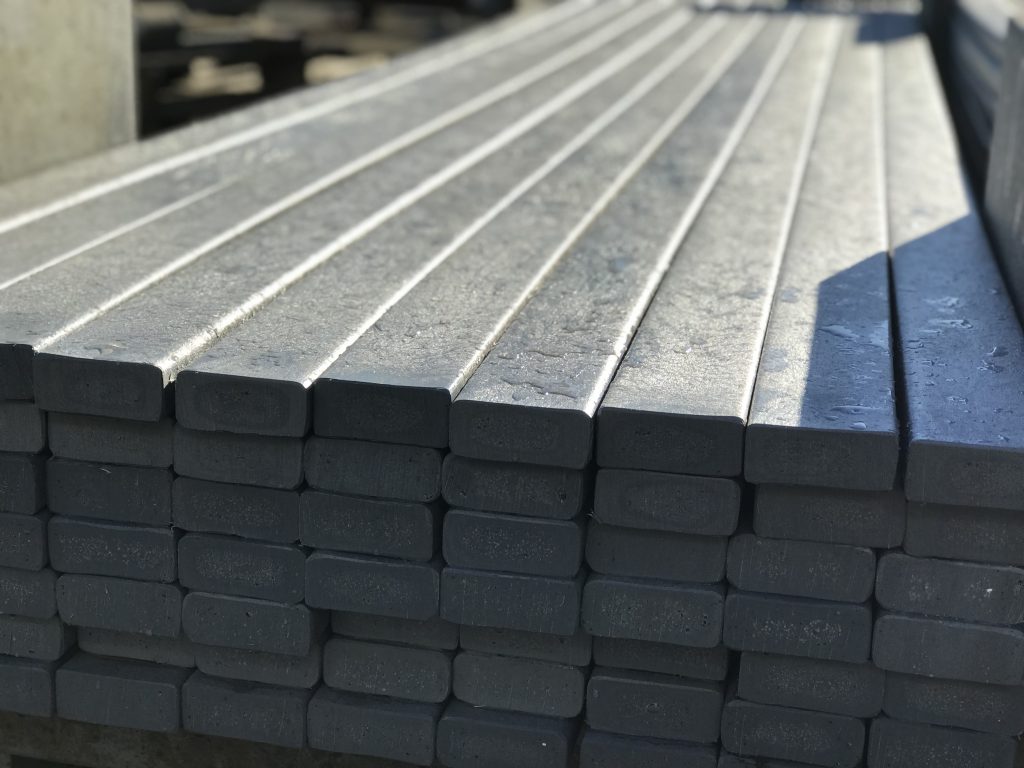
MAXiTUF is solid plastic lumber made from 100% recycled HDPE. We've made it at our plant in Coos Bay, Oregon, since 1989. It won't rot, splinter or soak up water, and it carries a 50-year limited warranty.
Request a quoteCall 1-541-269-5485
What MAXiTUF is
- Material100% recycled HDPE, solid all the way through. Current production is all post-consumer, plus about 3% colorant and UV stabilizers
- GradesStandard (nominal) and Premium (rough-cut, thicker for longer spans), plus timbers
- Sizes2×2 up to 6×12, lengths up to 24 ft depending on profile
- ColorsGray, black and brown, with UV stabilizers added
- Warranty50 years against rot, mildew, fungal decay, insects, water absorption and marine life
- LEEDCounts toward LEED recycled-content credits. Request documentation for your order
Where it's used
Turf nailer boards. Solid HDPE nailers for synthetic turf, made since 2000.
Boat trailer bunk boards. Boards that won't rot under a wet hull.
Fishing vessel decks. Floating decks on 4×4 stringers, with a deck calculator.
Marine and industrial. Docks and marinas, truck sideboards, airplane cribbing and heavy-duty pallets.
Agriculture. Horse stalls. Horses show no interest in chewing it.
Parts for manufacturers. Cut to length or custom profiles, shipped factory direct.
Working with MAXiTUF
It machines like wood. Cut, drill, rout and plane it with ordinary tools. See the machining guide.
Bolt it or weld it, don't glue it. Glue won't hold on HDPE. Use screws or bolts, or hot-air weld it.
Allow for movement. It grows and shrinks with temperature, so read the installation guide before you cut. HDPE works from −140°F to 240°F.
Tested strength. Independent lab tests measured flexural fiber stress of 3,260 to 3,950 psi and average screw withdrawal of 940 lb. See the engineering test data.
LEED and recycled content
MAXiTUF can help a project earn LEED credits as a recycled-content material. LEED certifies buildings, not products, so a product contributes to a project's credits rather than being "LEED certified" itself.
Recycled content. LEED v4 and v4.1 count recycled content as post-consumer content plus half of any pre-consumer content. Our current production uses post-consumer HDPE only, so the HDPE counts in full. The colorant and UV stabilizers, about 3%, are not recycled content.
Documentation. We've filled out LEED submittal forms for projects before. Request recycled-content documentation for your order below, and tell us which LEED version your project uses. More in our LEED notes.
Request LEED documentation for your order
Buying MAXiTUF
MAXiTUF is sold factory direct from Coos Bay, Oregon. We quote by the unit and quote freight too. Request a quote or call 1-541-269-5485.
MAXiTUF questions
What is MAXiTUF?
MAXiTUF is solid plastic lumber made from 100% recycled HDPE (high-density polyethylene). Current production uses post-consumer HDPE only, plus about 3% colorant and UV stabilizers. It won't rot, splinter or soak up water, and it carries a 50-year limited warranty.
Who makes MAXiTUF?
Resco Plastics, Inc. makes MAXiTUF at its plant in Coos Bay, Oregon, and has since 1989. It's sold factory direct.
What's the difference between Standard and Premium?
It's like nominal and rough-cut wood. Standard 2-inch boards are 1-1/2 inches thick. Premium boards are 1-7/8 inches thick and are made for longer spans.
Does MAXiTUF qualify for LEED?
MAXiTUF can contribute to a project's LEED credits as a recycled-content material. LEED certifies buildings, not products, so no lumber is LEED certified by itself. LEED v4 and v4.1 count post-consumer content in full, and our current HDPE is all post-consumer. We provide recycled-content documentation with your order for the LEED submittal.
What sizes and colors does MAXiTUF come in?
Profiles run from 2x2 up to 6x12 in Standard, Premium and timber sizes, in lengths up to 24 feet depending on the profile. Colors are gray, black and brown.